↑ ↓ to move · Enter to open
Platform · with Martin Brosig · 2026

kiloWatty

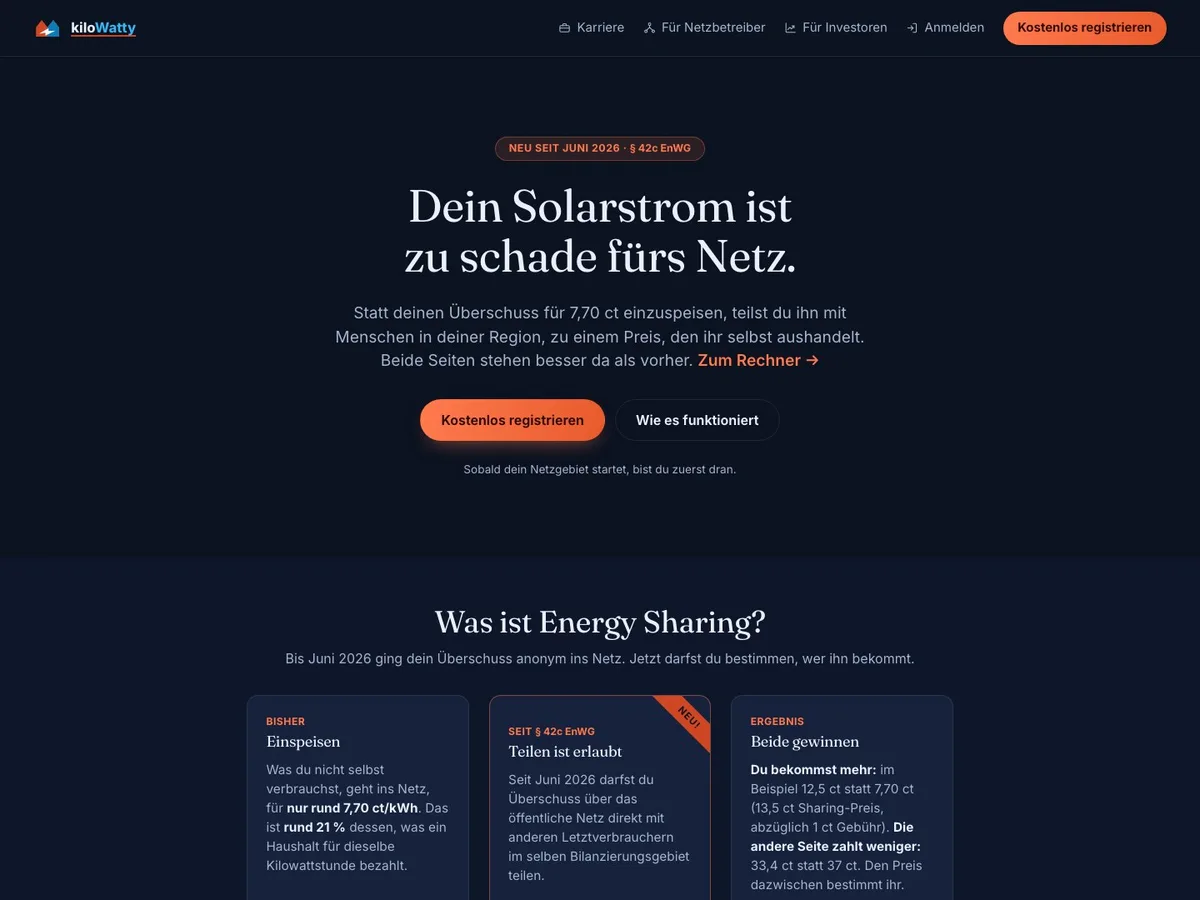
Since June 2026, German law lets you share surplus solar power with people in your region. kiloWatty matches producers and consumers, does the arithmetic and prepares the contract.

kilowatty.de
Started
August 2026
Partner
Martin Brosig
Stack
Rust, PostgreSQL, Astro, Expo
Role
Software architecture, development
kiloWatty
Overview

The idea

Until June 2026, surplus rooftop solar power went into the grid for a fixed feed-in tariff of a few cents. § 42c of the German Energy Industry Act now allows it to be sold to someone else over the public grid, as long as both sides are in the same balancing area. The producer earns more than the tariff, the consumer pays less than for grid power, and the two agree on the price in between. kiloWatty finds the matching partner, calculates what both gain and prepares the contract. It is honest about timing: sharing works only with smart meters, which most households will get with the rollout in 2028 and 2029, so people sign up now and are first in line when their grid area starts.

What it does

  • CalculatorProducers and consumers enter their numbers and see what sharing is worth, computed in the browser.
  • Queue by grid areaAn account stores the profile and a place in line for the grid area, ready for matching when it starts.
  • For grid operatorsA separate route for network operators and investors, with its own formal pages and contact form.

How it is built

A Rust backend with Axum, sqlx and PostgreSQL serves an Astro website with React islands and an iOS app built with Expo; both clients share one TypeScript core for API access and domain rules. Every claim on the site is checked against the code before a release, so the site never promises a feature that does not exist yet. Built with Martin Brosig, who runs organisation and operations, and Thomas Oelmayer, who covers law and regulation.